
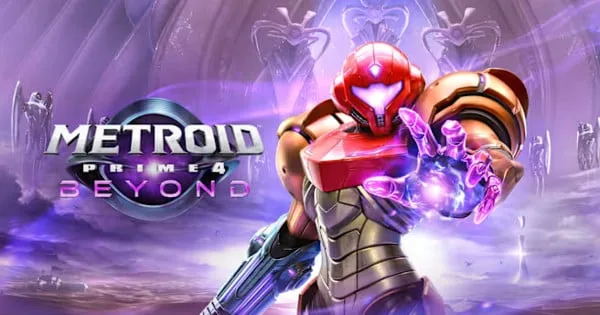
Metroid Prime 4: Beyond Arrives on Switch 2 With the Weight of a 20-Year Wait
Bounty hunter Samus Aran finally returns in grand style, but her triumphant comeback isn't perfect. Metroid Prime 4: Beyond launched on the Nintendo Switch 2 in December 2025, ending one of the longest waits in gaming history. Developed by Retro Studios after a turbulent restart, the game promised to honor the legacy of the first-person series. The mission itself is electrifying: explore the planet Viewros, master new psychic abilities, and pilot the agile Vi-O-La bike. The question every fan had, however, was simple: was the wait worth it? The answer, after hours of analysis, is a resounding "almost." We found an excellent game at its core, one that shines brightly but stumbles over design flaws that slightly dim the luster of the achievement.
For audiences accustomed to Nintendo's quality and still warmed by the success of Metroid Prime Remastered, expectations were sky-high. In Beyond, Samus isn't entirely alone. For the first time, she interacts with Federation soldiers at certain points, adding a new dynamic to the classic formula of isolation. In this way, the game balances the introspective atmosphere that made the series famous with more spectacular action sequences. The result is an experience that hits the mark in most decisive moments, but due to some questionable choices, leaves the feeling that it could have been even more polished.
The Apex and the Fall: When Gameplay Shines and When It Stumbles
Navigating the environments of Viewros is, for the most part, pure delight. Combat is incredibly responsive and satisfying, especially with the Switch 2's motion controls and the precise aiming option, reminiscent of mouse fluidity. The visuals are stunning and make great use of the console's hardware. Furthermore, the introduction of the Vi-O-La bike is an absolute win, offering explosive mobility and fun in both exploration and chase sequences. However, the game makes curious errors that break this virtuous rhythm.
The biggest culprit is the psychic powers. While they sound like an interesting addition, their practical execution is unnecessarily complicated. To perform basic actions, like activating a telekinetic bomb, the player needs to execute a sequence of commands that feels more like bureaucratic work than a skill of an intergalactic bounty hunter. This artificial complexity creates frustrating friction amidst gameplay that is, overall, so polished. In other words, the game seems to fight against itself at certain points.
Confusing Challenges and a Toothless Villain
This inconsistency becomes even more evident in some enemy encounters. In a specific section of the Ice Belt, the game throws a swarm of lupine creatures at the player without giving any clear clues about the ideal strategy to defeat them. The result? Many attempts, mistakes, and that frustrating feeling that seems unfair. Meanwhile, the narrative also falters due to hesitation. The presence of the antagonist Sylux, so anticipated by the most hardcore fans, ends up being underutilized. His dramatic potential seems wasted.
Similarly, Samus's own arc seems conflicted. The plot tries, at times, to give the character more emotional depth, but quickly retreats to the emblematic silence that has always defined her. Therefore, Beyond feels like a title torn between innovation and tradition, between wanting to tell a new story and the obligation to be a classic "Metroid Prime." This dual identity doesn't ruin the experience, but it prevents it from reaching legendary status.
Verdict: An Essential Journey on Switch 2, With Some Detours
There's no doubt: Metroid Prime 4: Beyond is a great game. The first-person exploration is captivating, the map design is intelligent, and the feeling of being Samus Aran has never been so well translated. It's a triumphant return for one of Nintendo's most important heroines and a great reason to own a Switch 2 in January 2026. For the fans who followed the entire saga, the moments of pure pleasure and discovery far outweigh the bad parts.
Still, it's impossible to pretend the stumbles don't exist. The poorly calibrated combat encounters and the unintuitive psychic mechanics tarnish a work that comes very close to greatness. The lingering feeling is that, with more rigorous final polish, Beyond could have been the definitive game for the new console. Thus, the conclusion is clear: Samus is back, powerful and impressive, but her latest mission proves that even legends can slip up from time to time.